
Tuesday | 28th July 2026
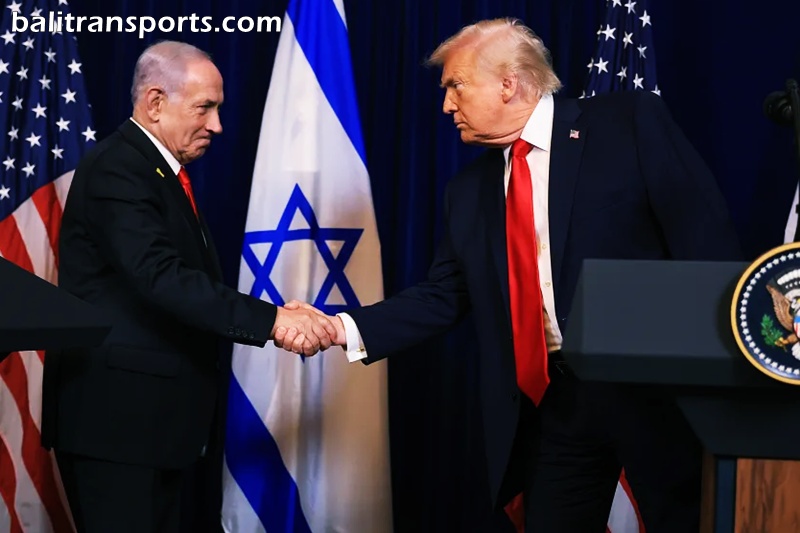
For years, Israeli Prime Minister Benjamin Netanyahu’s visits to Washington followed a familiar diplomatic pattern. Upon arriving at the White House, he would be welcomed with ceremonial honors, exchange warm handshakes with US President Donald Trump, and present a united front before cameras, emphasizing the unwavering partnership between Israel and the United States. Those meetings often highlighted the two leaders’ close personal relationship and their shared commitment to confronting Iran, strengthening Israel’s security, and expanding regional alliances.
However, Netanyahu’s latest trip to Washington marks a striking departure from that script. Behind the carefully managed public statements lies a relationship that has become increasingly complicated following months of military conflict with Iran, disagreements over ceasefire efforts, and diverging visions for the future of the Middle East. While both leaders continue to describe each other as close allies, recent events suggest that the once seamless partnership is now under considerable strain.
Seventh White House Visit Under Trump’s Second Presidency
This visit marks Netanyahu’s seventh trip to Washington since Trump returned to office, making him the foreign leader who has met the American president more frequently than any of his international counterparts.
Unlike previous visits that projected confidence and strategic unity, Netanyahu arrives in Washington facing significant domestic political challenges. Israel is preparing for a national election in October, and recent opinion polls indicate that Netanyahu’s governing coalition remains well short of securing a parliamentary majority.
The prime minister therefore has multiple objectives. Beyond discussing regional security issues, he hopes to demonstrate to Israeli voters that he continues to enjoy privileged access to the White House and remains Washington’s closest partner in the Middle East.
Difficult Negotiations to Secure the Meeting
According to officials familiar with the discussions, arranging the meeting proved far more difficult than in previous years.
Netanyahu reportedly spent several weeks seeking an invitation to meet Trump, hoping to brief him on developments following the Iran conflict and caution him against making diplomatic concessions that Israel believes could strengthen Tehran.
Initially, Trump showed little enthusiasm for scheduling the meeting. White House officials were reportedly irritated by what they viewed as repeated Israeli attempts to pressure the administration through carefully timed media reports suggesting that a meeting was already imminent.
One US official described the strategy as an effort to “will a meeting into existence.”
The funeral of longtime Republican Senator Lindsey Graham eventually created an opportunity for the leaders to meet while both were already expected to attend memorial events in Washington.
Despite earlier reluctance, senior administration officials continue to publicly emphasize Trump’s support for Israel.
One senior official stated that Trump maintains a “strong relationship” with Netanyahu and described the president as Israel’s greatest ally, arguing that recent US-Israeli military cooperation significantly weakened Iran’s ability to develop nuclear weapons.
From Military Unity to Strategic Disagreements
The relationship between Trump and Netanyahu appeared exceptionally strong at the beginning of the Iran war.
When they met earlier in February, both leaders discussed military planning that later evolved into an unprecedented joint campaign targeting Iran’s military infrastructure and nuclear facilities. The opening phase of the conflict showcased extraordinary operational coordination between American and Israeli forces.
Initially, both governments publicly celebrated the campaign, portraying it as a historic demonstration of allied military strength.
As the conflict continued, however, fundamental differences emerged.
Israeli leaders believed sustained military pressure could eventually destabilize or even overthrow Iran’s leadership. Trump, meanwhile, became increasingly eager to avoid a prolonged regional war and instead sought an exit strategy before the conflict expanded further.
The divergence became more pronounced as the war failed to achieve its most ambitious objectives.
Trump’s Growing Frustration
Sources familiar with White House discussions say Trump entered the conflict believing it would last only several weeks.
Netanyahu and other advisers reportedly assured him that Iran would be unable to sustain prolonged resistance and that the conflict could fundamentally weaken the Islamic Republic.
Months later, those expectations remain unrealized.
Rather than collapsing, Iran continues to resist despite suffering major military losses. The conflict has instead evolved into a dangerous military stalemate involving periodic missile attacks, proxy confrontations, and ongoing regional instability.
According to US officials, Trump’s private frustration has become increasingly visible. During internal meetings, he has reportedly used profanity while criticizing the prolonged conflict and expressing disappointment that Tehran has not capitulated as anticipated.
His primary objective has shifted toward ending the conflict before it creates broader political and economic consequences, particularly ahead of America’s November elections.
Netanyahu Brings New Intelligence on Iran
During this week’s discussions, Netanyahu intends to present Trump with updated Israeli intelligence regarding Iran’s efforts to rebuild both its nuclear infrastructure and conventional military capabilities.
Israeli officials argue that Tehran is already attempting to recover from wartime damage and warn that reducing military pressure now could allow Iran to resume sensitive weapons programs.
Nevertheless, Israeli assessments suggest Trump currently has little appetite for restarting large-scale military operations against Iran before the US presidential election.
Instead, Washington appears more interested in preserving the fragile ceasefire while maintaining diplomatic and economic pressure.
Disagreements Over the Iran Ceasefire
Although Netanyahu has largely avoided criticizing Trump publicly over the ceasefire agreement reached earlier this year, tensions remain evident within Israel’s political establishment.
Several of Netanyahu’s political allies openly condemned the ceasefire, arguing that it allowed Iran valuable time to regroup.
Media outlets supportive of Netanyahu also criticized senior Trump advisers—including Vice President JD Vance, Jared Kushner, and special envoy Steve Witkoff—for encouraging negotiations rather than continuing military pressure.
The criticism triggered an unusually public exchange between Washington and Jerusalem.
Vance accused members of Netanyahu’s cabinet of attempting to undermine ongoing diplomatic efforts while simultaneously influencing American public opinion against negotiations.
He reportedly warned Israeli officials that they risk alienating “the only powerful ally they have left.”
Domestic Politics Influence Both Leaders
Political calculations now influence nearly every interaction between Trump and Netanyahu.
Trump understands that Netanyahu enters Israel’s October election campaign politically weakened and that visible American support could significantly improve his standing among conservative Israeli voters.
Recognizing this leverage, Trump has offered selective public backing.
Last week, for example, Trump declared that Netanyahu would not face arrest if he traveled to the United States despite previous campaign statements made by New York mayoral candidate Zohran Mamdani suggesting otherwise.
At the same time, Trump has privately expressed growing irritation with Netanyahu.
According to multiple officials, Trump has referred to the Israeli leader as “crazy” and “difficult,” particularly after Israel continued military strikes inside Lebanon despite American efforts to preserve a ceasefire.
Telephone conversations between the two leaders reportedly became increasingly tense as Trump demanded restraint while Netanyahu argued for continued military operations.
Lebanon Becomes Another Source of Friction
The disagreements extend beyond Iran.
Trump has repeatedly urged Israel to reduce military operations against Hezbollah and move toward a more durable ceasefire with Lebanon.
During one widely reported phone conversation, Trump allegedly told Netanyahu that continued fighting was damaging Israel’s international reputation, saying that “everybody hates Israel because of this.”
Although Israel eventually reached a trilateral agreement involving Lebanon, significant disagreements remain unresolved.
Israeli forces continue maintaining positions in southern Lebanon, arguing that withdrawal cannot occur until Hezbollah fully disarms.
According to Israeli officials, the Trump administration has pushed Israel to withdraw not only from Lebanon but also from military positions inside Gaza and Syria as part of broader regional stabilization efforts.
Netanyahu reportedly informed Israel’s security cabinet that he opposes such withdrawals, believing they would create new security risks.
Emerging Disputes Over Turkey and Saudi Arabia
In recent weeks, two additional strategic disagreements have complicated US-Israeli relations.
The first involves reports that the Trump administration may eventually approve sales of advanced F-35 stealth fighter aircraft to Turkey.
Israeli defense officials worry that supplying Ankara with such sophisticated aircraft could gradually erode Israel’s long-standing qualitative military advantage in the region.
When questioned about Netanyahu’s concerns, Trump responded that decisions regarding American arms sales are made solely by the president, describing Turkey as “a tremendous ally.”
The second issue centers on discussions regarding civilian nuclear cooperation between the United States and Saudi Arabia.
Israeli officials fear that allowing Saudi Arabia to develop advanced nuclear capabilities—even for civilian purposes—could encourage other Middle Eastern countries to pursue similar programs, increasing the risk of a regional nuclear competition.
Trump has publicly linked any future nuclear cooperation with Saudi Arabia to broader diplomatic normalization between Riyadh and Israel through an expansion of the Abraham Accords.
Saudi officials, however, have not publicly endorsed such conditions.
Seeking a New Security Agreement
Beyond immediate regional crises, Netanyahu hopes to secure long-term strategic commitments from Washington.
Israeli officials are seeking assurances that future American defense decisions—including arms sales and regional nuclear agreements—will preserve Israel’s military superiority.
They also hope to begin negotiations on a new long-term defense agreement that would eventually replace the memorandum of understanding signed during the Obama administration.
Such an agreement could provide predictable military assistance, expanded defense cooperation, and stronger security guarantees for years to come.
Elections Shape Netanyahu’s Strategy
Netanyahu’s broader objective extends beyond diplomacy.
With Israeli elections approaching, the prime minister hopes to demonstrate that he remains indispensable in managing Israel’s relationship with Washington.
His advisers believe direct engagement with Trump can overcome disagreements within the broader US administration while reinforcing Netanyahu’s image as Israel’s most experienced international statesman.
They also hope continued cooperation could eventually pave the way for expanded regional normalization, particularly with Saudi Arabia, while strengthening Netanyahu’s campaign before voters head to the polls.
Public Unity Masks Private Friction
Despite repeated assurances that disagreements are merely “tactical,” multiple officials acknowledge that the relationship between Trump and Netanyahu is currently more complicated than at any point since Trump’s return to office.
The unusually difficult scheduling process, reports of heated private conversations, and widening differences over Iran, Lebanon, Turkey, and Saudi Arabia all illustrate a partnership that remains strategically important but increasingly challenged by conflicting priorities.
Adding to the uncertainty, the White House has not scheduled a traditional public photo opportunity for this meeting.
While similar discretion accompanied their February discussions due to sensitive military planning, observers note that the absence of public symbolism this time may reflect either preparations for future security operations—or efforts to manage visible tensions between two leaders whose political futures have become increasingly intertwined.