
Saturday | 24th October 2026
France is preparing for another major wave of protests this weekend as authorities intensify security measures to prevent a repeat of the violence and riots that swept across the country last week. The government is facing mounting pressure to restore public order while addressing widespread public dissatisfaction over education, employment opportunities, and the rising cost of living.
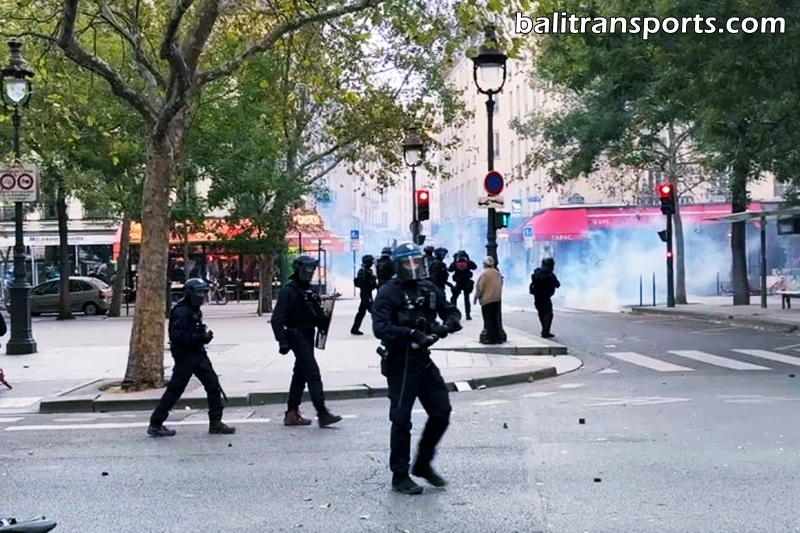
According to the French Interior Ministry, approximately 70,000 police officers will be deployed nationwide over the weekend. The unprecedented security operation reflects the government’s determination to prevent demonstrations from escalating into further violent confrontations, property destruction, and deadly clashes.
The operation will involve specialist police tactical units, helicopters, armored vehicles, police dogs, and water cannons. In Paris, the number of French army soldiers normally assigned to counterterrorism patrols will also be increased. The additional military presence is intended to relieve police officers of stationary security duties, allowing more personnel to focus on crowd control, public safety, and the prevention of potential disturbances.
French Interior Minister Laurent Nuñez issued a strong warning on Friday to anyone planning to exploit the demonstrations to commit violence or destroy property. He emphasized that the government would take a firm approach, declaring that it would be “uncompromising with those who engage in destruction.” His statement underlined the authorities’ determination to prevent another weekend of unrest while distinguishing between peaceful demonstrators and individuals involved in criminal activity.
Background to France’s Growing Wave of Protests
The latest unrest follows several weeks of demonstrations driven by frustration over the education system, limited employment prospects, and the increasing cost of living. Many young people have expressed concerns about their future, particularly the difficulty of finding secure jobs, obtaining affordable housing, and achieving financial stability in an increasingly expensive economic environment.
What began as largely peaceful demonstrations attended primarily by students and supported by trade unions gradually developed into a much broader movement. Workers, activists, and other groups joined the protests, bringing different economic and social grievances into the streets.
However, the situation deteriorated rapidly last week when some demonstrations turned violent. Rioting, clashes with security forces, and widespread property damage transformed the protests into one of France’s most serious episodes of nationwide unrest in recent years.
The violence has raised questions about the government’s ability to anticipate and manage large demonstrations. Critics have questioned whether authorities adequately assessed the potential scale of the unrest, while officials are now under pressure to demonstrate that they can protect the public and prevent further bloodshed.
In response, authorities introduced curfews in several cities earlier this week to help restore calm and limit opportunities for further disturbances. The measures reflect growing concern that local tensions could spread and that additional demonstrations might again descend into violence.
Paris Braces for a Massive Saturday Demonstration
Paris is expected to become the focal point of this weekend’s protests. A large demonstration has been called for Saturday afternoon, with French media reports anticipating that hundreds of thousands of people could take part.
The march is being organized by UNEF, France’s main student union, while the major trade union CGT has announced that it will participate. Their involvement highlights the extent to which the unrest has moved beyond student concerns to encompass wider dissatisfaction among workers and other sections of society.
Additional participants are expected to include farmers, climate activists, and members of the Yellow Vests movement. The Yellow Vests first emerged in 2018 during protests against fuel taxes and the rising cost of living, eventually becoming a symbol of broader public anger over economic inequality and government policies.
The participation of such diverse groups could make Saturday’s demonstration particularly significant. Although their individual demands may differ, many participants share concerns about living costs, economic security, and the government’s response to public grievances.
French President Emmanuel Macron has sought to limit the potential for further unrest. While the Paris demonstration has been authorized, Macron announced a ban on non-trade-union protests scheduled for Saturday as part of efforts to control the situation.
The restrictions reflect the difficult balance facing the government: allowing people to exercise their right to peaceful assembly while preventing demonstrations from becoming opportunities for violence. Authorities must also distinguish between organized protests and unauthorized gatherings that could increase the risk of clashes or damage to public property.
Extensive Security Measures Across the French Capital
The preparations for Saturday extend well beyond the deployment of police officers and official warnings. Following criticism over the handling of last weekend’s riots, Paris authorities have introduced additional preventive measures designed to reduce the opportunities for vandalism and disorder.
The City of Paris announced that public spaces would be cleared of objects and materials that could potentially be used to damage property or create dangerous obstacles. These include temporary barriers, rubbish bins, construction materials, and other items that could be turned into projectiles or used to obstruct streets.
Such measures are intended to reduce the risks associated with large crowds, particularly in busy commercial districts and around major public buildings. They also reflect lessons drawn from previous episodes of urban unrest, during which street furniture and construction materials have sometimes been used during clashes.
Security planning will be especially important in central Paris, where demonstrations could affect major roads, public transport, cultural institutions, and popular tourist destinations. Police will need to manage crowd movements while keeping emergency routes accessible and protecting residents, visitors, businesses, and public infrastructure.
The scale of the operation demonstrates how seriously the government views the threat of renewed violence. Nevertheless, the effectiveness of the measures will depend not only on the number of officers deployed but also on coordination between police units, local authorities, emergency services, and protest organizers.
Major Tourist Attractions and Cultural Venues to Close
The anticipated demonstrations are already having a significant impact on tourism and cultural activities in Paris. Several major attractions and entertainment venues have announced closures or cancellations as authorities prepare for the expected crowds and potential security risks.
Among the institutions expected to close on Saturday are the Louvre Museum, the Musée d’Orsay, and the Musée de l’Orangerie. These internationally renowned museums attract large numbers of visitors and are important components of Paris’s cultural and tourism economy.
Their temporary closure is likely to disrupt sightseeing plans for international tourists, particularly those who have arranged short visits or purchased tickets in advance. Travelers may need to reschedule museum visits, adjust their itineraries, or avoid central areas affected by demonstrations.
The impact has also extended to the art world. Art Basel concluded its Paris fair on Friday, two days earlier than originally scheduled, reflecting the disruption caused by the security situation.
The Paris National Opera has cancelled its Saturday performances, citing the protests as the reason. In addition, at least two dozen metro stations are expected to close for much of the day, according to Paris municipal authorities.
The transport restrictions could make moving around the capital considerably more difficult. Visitors and residents may face longer journeys, crowded alternative routes, and limited access to certain districts. Anyone planning to travel through central Paris should check official transport announcements and local security updates before setting out.
The disruption illustrates how civil unrest can affect not only public safety but also the cultural institutions, hospitality businesses, retailers, and tourism services that contribute significantly to the city’s economy.
NFL Game Scheduled Despite Security Concerns
Despite the uncertainty surrounding the protests, an American football game between the Pittsburgh Steelers and the New Orleans Saints is scheduled to take place at the Stade de France, just outside Paris, on Sunday.
The event is expected to attract sports fans and international visitors, making security arrangements around the stadium an important consideration for authorities. Large sporting events require coordinated planning involving police, venue operators, transport services, and event organizers, particularly when they take place during periods of heightened public tension.
Although the game is scheduled to proceed, the National Football League has cancelled a Steelers fan event in Paris. The decision highlights the precautions being taken to reduce exposure to potential disruptions while allowing the main sporting fixture to go ahead.
Fans attending the game may need to allow additional time for travel and security checks. They should also monitor announcements from the NFL, stadium officials, and local transport authorities for any changes to access arrangements or travel recommendations.
The contrast between the continuation of the match and the cancellation of the fan event demonstrates the challenges facing organizers as they attempt to maintain scheduled activities while responding to an evolving security situation.
Deaths, Serious Injuries, and Arrests Following Last Weekend’s Riots
The severity of last weekend’s violence has intensified concerns about what could happen if demonstrations escalate again. At least two people died during the unrest, while numerous others sustained serious injuries.
Among the injured were two people who reportedly lost their hands, underscoring the dangerous nature of some of the incidents. The deaths and severe injuries have added urgency to government efforts to prevent further confrontations and protect both demonstrators and the wider public.
French Justice Minister Gérald Darmanin said approximately 2,700 people had been held for questioning and that 232 had been incarcerated in connection with the riots. These figures indicate the scale of the police and judicial response following the disturbances.
The authorities are expected to continue investigating incidents involving violence, destruction of property, and other suspected criminal offences. Those investigations may involve reviewing evidence, identifying individuals suspected of participating in violent acts, and determining responsibility for specific incidents.
At the same time, the government faces the challenge of ensuring that security measures remain proportionate and that peaceful demonstrators can exercise their legal rights. The handling of arrests, crowd-control tactics, and restrictions on public gatherings will likely remain subjects of public debate.
A Critical Test for the French Government
This weekend represents a significant test for the French government as it attempts to restore stability without further aggravating the social tensions behind the protests.
The deployment of approximately 70,000 police officers, the use of specialist security equipment, restrictions on demonstrations, and the closure of major public venues all point to the seriousness of the situation. However, security operations alone may not resolve the underlying frustrations that have brought students, workers, farmers, and activists into the streets.
Education, job prospects, and the cost of living remain central concerns for many demonstrators. If these issues are not addressed, public dissatisfaction could continue even if the immediate threat of violence is contained.
The government must therefore manage two interconnected challenges: maintaining public order in the short term and responding to the economic and social grievances driving the demonstrations over the longer term.
For residents, businesses, and tourists, the immediate priority is safety. People in affected areas should follow instructions from local authorities, avoid demonstrations where tensions are high, and check transport and venue announcements before travelling.
Whether Saturday’s demonstrations remain peaceful or develop into another episode of widespread unrest will have important consequences for France’s public safety, political climate, and international image. After last weekend’s deadly violence, authorities are determined to prevent a repeat, but the scale of the planned demonstrations means that the coming days remain highly uncertain.