



Bali Rice Fields – Discover the Beautiful Green Rice Terraces and Traditional Farming Landscapes of Bali
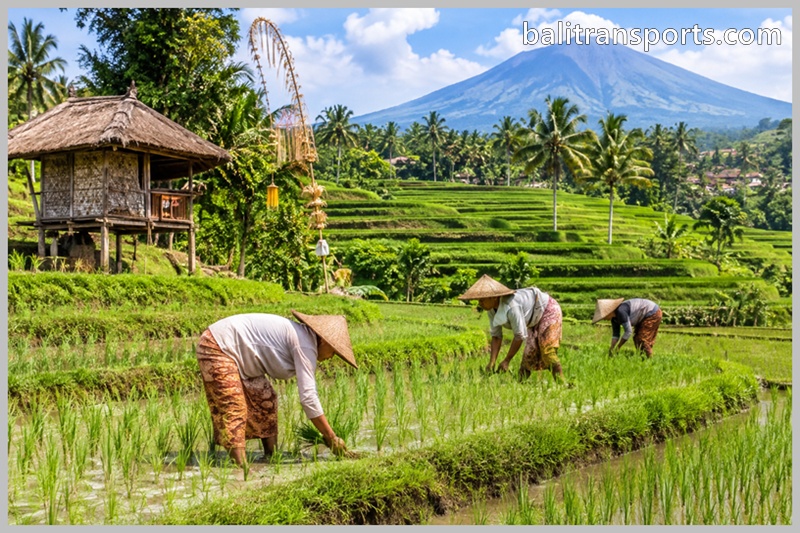
Bali is famous not only for its beautiful beaches, ancient temples, and tropical landscapes but also for its breathtaking rice fields and traditional rice terraces. The Bali rice fields are among the island’s most iconic natural attractions, offering visitors spectacular views of lush green paddies, rolling hills, coconut trees, and traditional Balinese villages. These beautiful agricultural landscapes reflect the island’s rich cultural heritage and the close relationship between Balinese people, nature, and agriculture.
Rice cultivation has been an essential part of Balinese life for centuries. For local communities, rice is more than just a staple food; it also has deep cultural and religious significance. Traditional farming activities are closely connected to Balinese Hindu beliefs, ceremonies, and the ancient irrigation system known as Subak. This community-based water management system distributes water fairly among rice farmers and represents the spirit of cooperation and harmony that has shaped Balinese society for generations.
Visitors traveling around Bali can discover rice fields in many different regions, from the famous terraced landscapes of Tegalalang and Jatiluwih to the peaceful countryside of Ubud, Sidemen, and Pupuan. Each destination offers a different atmosphere, making Bali’s rice fields an excellent attraction for sightseeing, photography, cultural exploration, and relaxing walks through the countryside.
The Beauty of Bali’s Traditional Rice Terraces
One of the most remarkable features of Bali’s agricultural landscape is its traditional rice terrace system. Instead of planting rice on flat land, farmers cultivate rice on carefully shaped hillsides, creating layers of green fields that follow the natural contours of the mountains and valleys.
These terraced rice fields create stunning scenery, especially during the growing season when the paddies are filled with water and reflect the surrounding sky. As the rice plants mature, the landscape gradually changes from bright green to golden yellow before harvest.
Walking along the narrow paths between the rice paddies allows visitors to experience the peaceful atmosphere of rural Bali. You can observe traditional farming activities, see local farmers working in the fields, photograph beautiful landscapes, and enjoy the fresh air away from the busy tourist areas.
Famous Rice Field Attractions in Bali
Bali has several well-known rice field destinations that are worth including in your holiday itinerary.
1. Tegalalang Rice Terraces, Ubud
Tegalalang Rice Terraces are among the most popular rice field attractions in Bali. Located approximately 10 kilometers north of Ubud, this destination is famous for its beautiful layered rice paddies, tropical vegetation, and scenic valley views.
Visitors can walk along the rice terrace paths, enjoy refreshments at restaurants overlooking the fields, and take photographs of the spectacular countryside. Tegalalang is also known for its popular jungle swings and scenic photo spots.
2. Jatiluwih Rice Terraces, Tabanan
Jatiluwih Rice Terraces are among the most impressive agricultural landscapes in Bali. Located in the highlands of Tabanan Regency, approximately 700 meters above sea level, Jatiluwih offers expansive views of traditional rice fields stretching across the slopes of Mount Batukaru.
The area is particularly famous for its extensive Subak irrigation system and traditional farming practices. Jatiluwih is part of the UNESCO-listed Cultural Landscape of Bali Province, recognized for its outstanding cultural and agricultural heritage.
Visitors can explore several walking trails, enjoy the peaceful mountain atmosphere, and experience one of the most beautiful rice terrace landscapes in Indonesia.
3. Ubud Rice Fields, Gianyar
Ubud is another excellent destination for discovering Bali’s traditional rice fields. Beyond its art galleries, museums, temples, and restaurants, Ubud offers beautiful countryside landscapes with green rice paddies surrounded by traditional villages.
Popular places include the Campuhan area, the rice field paths around Penestanan, and the scenic countryside near Sayan. These locations are ideal for morning walks, cycling, photography, and enjoying the peaceful atmosphere of rural Bali.
4. Sidemen Rice Fields, East Bali
Sidemen is a beautiful countryside destination in East Bali, known for its traditional villages, green rice paddies, and spectacular views of Mount Agung. Compared with more popular tourist destinations, Sidemen offers a quieter and more authentic rural atmosphere.
Visitors can walk through rice fields, explore traditional villages, visit local weaving workshops, and enjoy views of the surrounding mountains. Sidemen is an excellent destination for travelers looking for peaceful nature experiences away from crowded tourist attractions.
5. Pupuan Rice Terraces, Tabanan
Pupuan is another beautiful area in western Tabanan, famous for its expansive rice fields, tropical plantations, and mountain scenery. The countryside is particularly attractive for visitors interested in exploring Bali beyond the main tourist destinations.
The area offers a combination of rice paddies, coffee plantations, clove trees, and traditional villages, providing an opportunity to discover the agricultural lifestyle of local Balinese communities.
The Subak Irrigation System – A Unique Balinese Tradition
One of the most important aspects of Bali’s rice fields is the traditional Subak irrigation system. Subak is an ancient community-based water management organization that has supported rice cultivation in Bali for centuries.
Through this system, farmers work together to manage irrigation channels, distribute water, maintain agricultural land, and organize farming activities. Water flows from natural springs and rivers through canals and tunnels before reaching individual rice terraces.
Subak is closely connected to the Balinese philosophy of Tri Hita Karana, which emphasizes harmony between humans, nature, and the spiritual world. This philosophy explains why rice farming in Bali is not simply an agricultural activity but also an important part of the island’s cultural and religious identity.
The cultural landscape of Bali’s Subak system was recognized as a UNESCO World Heritage Site in 2012, highlighting its importance as a living cultural tradition.
History of Traditional Rice Fields in Bali
Traditional rice cultivation has played an essential role in the history, economy, culture, and daily life of the Balinese people for centuries. The traditional wet rice farming system, locally known as sawah, has been one of the foundations of Bali’s agricultural economy, particularly in the island’s fertile lowland areas. Rice is not only the main staple food of the Balinese population but also an important part of religious ceremonies, cultural traditions, and community life.
The history of rice cultivation in Bali dates back more than a thousand years. One of the earliest known references to rice farming appears in an ancient Balinese inscription, or prasasti, dated to 882 AD. This historical record provides evidence that rice cultivation was already established during the early period of Balinese history. It is also possible that wet rice agriculture existed even earlier, potentially dating back to the beginning of the first millennium or before.
The development of traditional rice fields was supported by Bali’s favorable natural conditions, including fertile volcanic soil, abundant water resources, tropical rainfall, and suitable agricultural land. These conditions allowed local communities to develop productive rice-growing areas across valleys, riverbanks, and mountain slopes.
However, the long-term productivity of Bali’s rice fields was not simply the result of fertile soil and favorable weather. It also depended on the knowledge, experience, and agricultural skills of Balinese farmers, who developed traditional methods of preparing the soil, maintaining fertility, managing irrigation, and organizing planting and harvesting activities.
Over generations, these farming practices became closely connected to the traditional Balinese Subak irrigation system, which continues to play an important role in maintaining the island’s agricultural landscape.
Traditional Rice Field Preparation and Soil Fertilization
Preparing the soil is one of the most important stages of traditional wet rice cultivation in Bali. Before planting begins, farmers carefully prepare their rice fields to create suitable conditions for the healthy growth of rice plants.
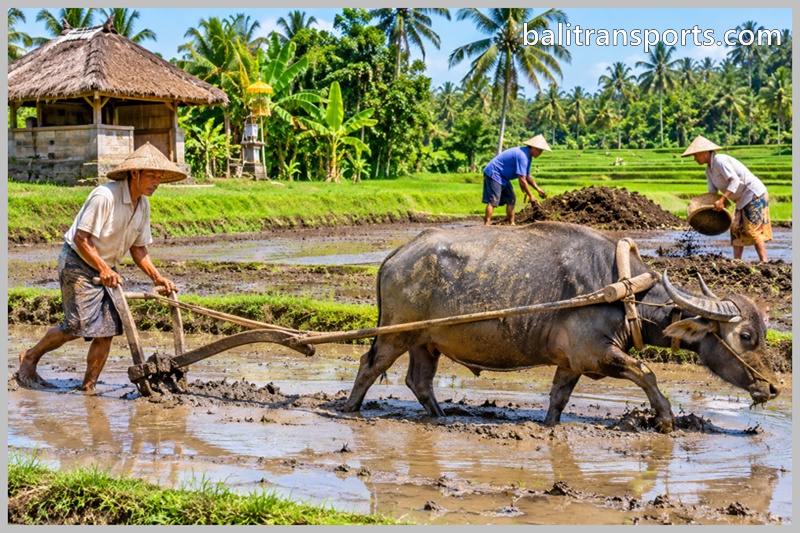
Traditional farming methods rely heavily on natural fertilizers, including wood ash, decomposed organic materials, and cow or buffalo manure. In the past, many farming families kept one or more cows or buffaloes, which provided both agricultural assistance and natural fertilizer for maintaining soil fertility.
After the previous rice harvest, leftover plant materials and agricultural waste were traditionally collected and, in some farming practices, burned to produce ash. The fields were then cleared and loosened using simple agricultural tools.
The next stage involved flooding the rice paddies with water. Farmers spread natural manure across the fields before ploughing the soil several times. Traditionally, cows or buffaloes were used to pull wooden ploughs through the muddy ground.
Once the soil had been sufficiently worked, farmers used a heavy wooden leveling tool, sometimes pulled by livestock, to smooth the surface of the fields. This process created an even layer of soft mud, allowing water to be distributed more consistently and rice seedlings to be planted under suitable conditions.
These traditional soil preparation techniques helped maintain agricultural productivity while making efficient use of locally available natural resources.
The Rice Growing Period and Traditional Farming Activities
After the fields have been prepared, farmers begin planting rice seedlings. During the early stages of growth, careful attention is required to ensure that the young rice plants develop properly.
Traditional Balinese farmers regularly inspect their fields, remove weeds, manage water levels, and monitor the condition of the rice plants. Water is carefully controlled through irrigation channels, allowing the fields to receive an appropriate supply throughout the growing season.
The Subak irrigation system plays an important role in this process. Through cooperation between farming communities, water is distributed from rivers, springs, and reservoirs to individual rice fields. This shared system helps farmers coordinate agricultural activities and maintain a reliable water supply.
As the rice plants grow, farmers also monitor potential threats from insects, plant diseases, and other agricultural pests. Traditional farming methods include various techniques to protect the crops and reduce damage.
When the rice plants begin developing grain heads, birds can become a major concern. Farmers traditionally use different methods to keep birds away from the ripening rice. These include scarecrows, bamboo poles, flags, colorful streamers, and simple wind-powered noise makers that create movement and sound across the fields.
In some areas, farmers also take turns watching their rice fields during the day and night to protect the crops from birds, rats, and other animals. These activities demonstrate the care and attention required throughout the traditional rice-growing cycle.
Traditional Rice Harvesting in Bali
Rice harvesting is one of the most important and rewarding stages of traditional agriculture in Bali. After months of preparation and cultivation, the rice plants gradually mature, and their green stalks turn golden yellow, indicating that the crop is ready to be harvested.
Traditionally, rice harvesting is a community activity involving family members, relatives, neighbors, and other farmers. In some villages, harvesting assistance is organized through a traditional working group or harvesting association known as seka manyi.
During the harvest, groups of workers move across the rice fields, cutting the mature rice stalks by hand. Traditional harvesting methods often involve small cutting tools, allowing workers to harvest the rice carefully and reduce grain loss.
Once harvested, the rice stalks are gathered into bundles and transported to the farmer’s home or traditional rice barn, known locally as lumbung padi. These traditional storage structures are designed to keep harvested rice in suitable conditions for later use.
In traditional farming households, rice stalks could be stored in bundles for extended periods. When rice was needed for daily consumption or sale, the bundles were removed and processed through threshing and milling to separate the edible grains from the stalks and husks.
The harvested rice was then used for family consumption, exchanged for other agricultural products, or sold in local markets when farmers needed additional income or household supplies.
Rice Storage and Processing in Traditional Balinese Households
After harvesting, traditional rice storage plays an important role in maintaining the household food supply. Rice is carefully kept in traditional storage buildings or designated storage areas within the family compound.
In earlier times, farmers commonly stored harvested rice in the form of dried stalk bundles rather than immediately processing the entire harvest. This allowed families to preserve their rice supplies and process only the amount required for daily meals.
Traditional rice processing involved several stages, including threshing, drying, separating the grains from their husks, and milling. These activities were carried out using simple tools and methods passed down through generations.
Rice storage was also closely connected to Balinese cultural traditions. Rice is regarded as a valuable gift of nature and is associated with Dewi Sri, the goddess traditionally connected with rice, fertility, and agricultural prosperity.
For this reason, rice farming has always had significance beyond food production. It represents the relationship between agricultural communities, the natural environment, and Balinese spiritual beliefs.
Best Time to Visit Bali Rice Fields
Bali’s rice fields are beautiful throughout the year, although their appearance changes depending on the agricultural season and planting cycle.
- Fresh green rice fields: The paddies are particularly attractive when young rice plants begin growing, creating beautiful green landscapes.
- Water-filled rice terraces: Before or during planting, flooded paddies reflect the sky and surrounding mountains, creating excellent photography opportunities.
- Golden rice fields: As the rice approaches harvest, the fields turn golden yellow, offering a different but equally beautiful landscape.
- Harvest season: Visitors may have the opportunity to observe traditional rice harvesting activities, depending on the location and farming schedule.
Rice planting and harvesting do not happen simultaneously throughout Bali. Different villages follow different agricultural schedules, so the appearance of the rice terraces can vary from one destination to another.
For photography and sightseeing, early morning is generally one of the best times to visit. The temperature is cooler, the atmosphere is peaceful, and the soft morning light creates beautiful scenery.
Activities to Enjoy at Bali Rice Fields
Visiting Bali’s rice fields offers more than simply enjoying the scenery. There are several activities that allow travelers to experience the island’s countryside and traditional culture.
- Rice terrace sightseeing: Enjoy panoramic views of green rice paddies, tropical forests, and traditional farming landscapes.
- Walking through rice fields: Follow designated paths and small countryside trails to explore the terraces more closely.
- Photography: Capture beautiful landscapes, traditional irrigation channels, coconut trees, and local farming activities.
- Cycling tours: Explore rural villages and scenic countryside roads while enjoying fresh air and beautiful natural surroundings.
- Cultural experiences: Learn about traditional rice cultivation, the Subak irrigation system, and Balinese agricultural traditions.
- Local restaurants and cafes: Relax with traditional Balinese food or refreshments while enjoying views of the surrounding rice terraces.
- Nature exploration: Discover tropical plants, small rivers, village temples, and the peaceful countryside.
How to Visit Bali Rice Fields
Bali’s rice fields are spread across several regions, so the best destination depends on your holiday location and travel itinerary.
- From Ubud, you can easily visit Tegalalang and the surrounding countryside.
- From South Bali, including Kuta, Seminyak, Canggu, and Nusa Dua, you can arrange a day trip to Ubud or Jatiluwih.
- From East Bali, Sidemen offers beautiful rice field landscapes with views of Mount Agung.
- From West Bali, Pupuan and the surrounding Tabanan countryside provide excellent opportunities to explore traditional agricultural areas.
For a comfortable sightseeing experience, visitors can arrange a private Bali car rental with an English-speaking driver. A private vehicle allows you to explore several rice field destinations at your own pace without worrying about public transportation or complicated routes.
For families, friends, and larger travel groups, Bali minibus and bus rental services are also available for countryside sightseeing tours.
The Importance of Traditional Rice Farming in Balinese Culture
Traditional rice fields are an important part of Bali’s cultural identity. The agricultural landscape reflects the cooperation, knowledge, and community values that have supported Balinese villages for generations.
The Subak system is particularly important because it combines irrigation management, agricultural cooperation, and religious practices. Farmers work together to maintain irrigation channels, organize planting schedules, distribute water, and support one another throughout the agricultural season.
This traditional system is closely associated with the Balinese philosophy of Tri Hita Karana, which emphasizes harmony between humans, nature, and the spiritual world.
In recognition of its exceptional cultural importance, the Cultural Landscape of Bali Province, including the Subak irrigation system, was inscribed on the UNESCO World Heritage List in 2012.
Today, traditional rice fields remain an important part of Bali’s agricultural economy and tourism industry. Visitors can experience this heritage by exploring beautiful rice terraces, observing traditional farming activities, and learning about the relationship between Balinese communities and their agricultural environment.
The rice fields of Bali are therefore much more than beautiful green landscapes. They represent centuries of agricultural knowledge, traditional cooperation, cultural heritage, and the enduring relationship between the Balinese people and their land.