
Monday | 27th April 2026
The attempted attack at the White House Correspondents’ Association Dinner has become more than a shocking security breach — it now stands as a stark illustration of how political violence is increasingly colliding with the institutions and rituals meant to sustain democratic life.
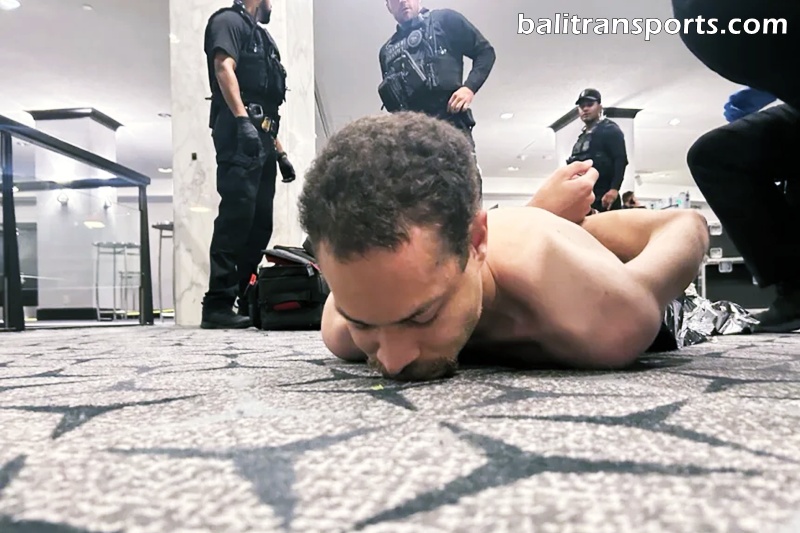
What was once a night of satire, press freedom, and uneasy coexistence between politicians and journalists instead turned into a scene of chaos and fear. As gunfire erupted outside the hotel ballroom, the carefully choreographed balance between power and scrutiny dissolved instantly. Guests in formal attire — Cabinet members, lawmakers, reporters, and cultural figures — found themselves united not by politics or ideology, but by a shared instinct for survival.
A symbol of a deeper fracture
The alleged targeting of Donald Trump and senior administration officials underscores how political violence in the United States is no longer confined to the fringes. If confirmed, the incident would mark the third known assassination attempt against Trump in less than two years — an extraordinary statistic in modern American politics.
But the broader significance lies beyond any one individual. The attack reflects a pattern: lone actors, often driven by grievance or radicalized beliefs, attempting to insert themselves violently into the political process. These incidents are no longer isolated shocks; they are becoming part of a grim backdrop to public life.
The United States has always grappled with political violence — from the assassinations of Abraham Lincoln and John F. Kennedy to more recent attacks on lawmakers. But the frequency and normalization of such threats in the 21st century are raising new concerns about whether democratic participation itself is being reshaped by fear.
When power and the press share the same vulnerability
One of the most striking aspects of Saturday night was the convergence of two groups often at odds: politicians and journalists. Trump, who has repeatedly denounced the media as “enemies of the people,” had reportedly planned fresh criticism that evening. Yet in the moment of crisis, those divisions became irrelevant.
As Secret Service agents and SWAT teams flooded the room, evacuating officials including Vice President JD Vance, the traditional adversarial relationship between the press and government gave way to a shared vulnerability. For a brief moment, the people who wield power and those who scrutinize it experienced the same fear — a reminder that political violence does not distinguish between its targets.
This convergence also highlights a paradox: the very openness that defines democratic societies — public events, accessible leaders, a free press — can also expose them to risk.
Security versus democracy
The immediate aftermath has triggered urgent questions about security. How could an armed individual get so close to a venue hosting the president and much of the government’s leadership? Should such events continue in their current form?
The presence of multiple figures in the presidential line of succession — including the president, vice president, and congressional leadership — has drawn particular scrutiny. As Representative Michael McCaul noted, a more successful attack could have triggered a constitutional crisis of unprecedented scale.
Proposals are already emerging. One option is to classify the dinner as a National Security Special Event, placing it under the same security umbrella as the Super Bowl or major international summits. Others have suggested limiting attendance by top officials or relocating the event entirely.
Trump himself renewed calls for a secure White House ballroom, arguing that a fortified venue would reduce risks. Yet such a move would fundamentally alter the nature of the event. Hosting journalists inside the White House — on government property — risks blurring the independence that the dinner is meant to celebrate.
The chilling effect on public life
Beyond logistics, the deeper concern is psychological. The steady drumbeat of threats and attacks is reshaping how politicians, journalists, and their families view public life.
From the 2011 shooting of Gabby Giffords to the 2017 attack on Steve Scalise, and the January 6 Capitol attack, the past decade has seen a steady escalation in politically linked violence. More recent incidents — including the হামmer attack on Paul Pelosi — reinforce the sense that no one in public life is entirely safe.
Lawmakers now openly acknowledge the toll. Some report that their families are urging them to leave politics altogether, questioning whether the risks are worth it. This quiet erosion — where capable individuals opt out of public service due to fear — may ultimately be one of the most damaging consequences.
A cycle that resists easy answers
In the political arena, each act of violence quickly becomes fodder for partisan blame. Democrats often point to inflammatory rhetoric from Trump and his allies, while Republicans argue that portraying Trump as an existential threat fuels extremism on the left. This cycle of accusation tends to harden divisions rather than address root causes.
Meanwhile, broader structural issues — including easy access to firearms and the amplification of extreme views online — remain largely unresolved. For many observers abroad, the recurrence of such incidents raises difficult questions about why meaningful reforms remain elusive.
An uncertain path forward
Trump’s response — insisting that the dinner should be rescheduled and that “violence should not win” — reflects a longstanding democratic principle: public life must continue despite threats. Cancelling events or retreating behind ever-thicker security barriers risks conceding space to fear.
Yet the tension is unavoidable. The more security is tightened, the more distant leaders become from the public. The more accessible they remain, the greater the risks.
The scene at Saturday’s dinner — where laughter turned to panic in seconds — encapsulates that dilemma. It suggests that the challenge is no longer শুধু preventing attacks, but preserving the openness that defines democratic society.
If such events can only take place inside heavily fortified spaces — effectively a “gilded cage” — it raises an uncomfortable question: can democracy still be fully practiced if it can no longer be freely lived in public?