
Thursday | 5th March 2026
Tensions in the Middle East have escalated sharply as Israel launched new airstrikes in both Iran and Lebanon, while Iranian authorities said they had carried out missile and drone attacks on Kurdish opposition groups in neighboring Iraq. The rapidly expanding conflict is drawing in multiple countries and raising fears of a wider regional war.
Israeli Airstrikes Hit Tehran
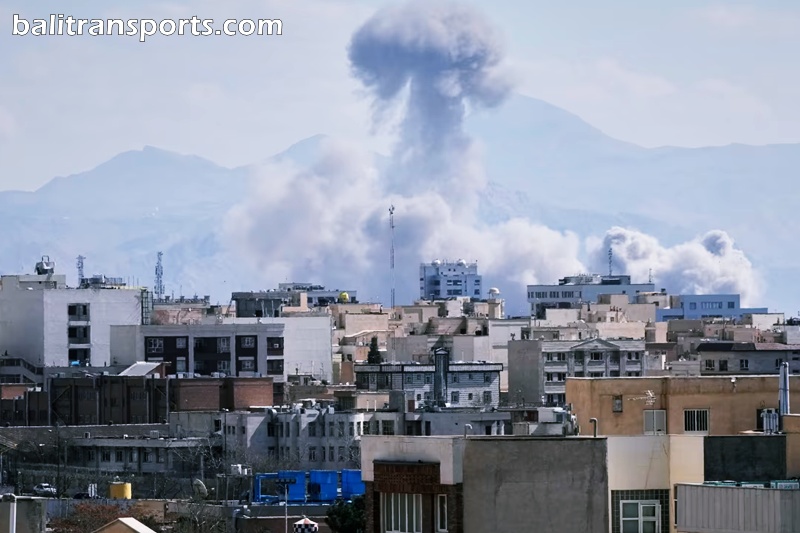
Explosions were reported across Iran’s capital, Tehran, as Israeli forces carried out a new wave of airstrikes targeting what officials described as military infrastructure. Israeli defense officials said the strikes were aimed at facilities linked to Iran’s missile and air-defense systems, which they claim were preparing further attacks against Israel and its allies.
The attacks are part of an ongoing military campaign that has seen Israeli aircraft strike several locations inside Iran, including missile launch sites and command centers. According to military sources, the objective is to weaken Iran’s ability to conduct long-range strikes and disrupt its regional military network.
Residents in Tehran reported hearing multiple explosions and seeing columns of smoke rising from different parts of the city. In recent days, the capital has experienced repeated bombardments as the conflict intensifies.
Strikes Reported in Beirut
At the same time, Israeli forces carried out airstrikes in Beirut, Lebanon. The attacks reportedly targeted areas in the city’s southern suburbs, a district widely known as a stronghold of Hezbollah.
Lebanese media said one strike hit an apartment building in the Dahieh district, raising speculation that the operation may have been aimed at a senior member of Hezbollah. The group, which is backed by Iran, has long been considered Israel’s most powerful regional adversary and has previously exchanged fire with Israeli forces.
Israel has accused Hezbollah of coordinating with Iran and supporting attacks against Israeli territory. The strikes in Beirut are part of Israel’s broader effort to weaken Iranian-aligned groups across the region.
Iran Launches Attacks in Iraqi Kurdistan
Meanwhile, Iran announced that it had launched missile and drone strikes against Kurdish opposition groups based in the autonomous Kurdistan Region of Iraq.
According to Iranian state media, the Islamic Revolutionary Guard Corps (IRGC) targeted the headquarters of several Kurdish groups it described as “anti-Iran separatist forces.” Officials said the attacks involved multiple missiles aimed at bases near the regional capital, Erbil.
Tehran has long accused Kurdish opposition movements operating from northern Iraq of planning attacks inside Iran. In response, Iranian forces have periodically conducted cross-border operations against their camps.
The strikes are the latest in a series of attacks in Iraqi Kurdistan since the conflict between Israel, the United States, and Iran intensified. Kurdish officials reported explosions and drone interceptions near several locations in the region.
Conflict Spreading Across the Middle East
The latest developments underscore how quickly the confrontation between Israel and Iran is expanding across the Middle East. Airstrikes, missile launches, and drone attacks have now been reported in multiple countries, including Iran, Lebanon, Iraq, and parts of the Persian Gulf.
Military analysts warn that the growing number of battlefronts could transform the crisis into a broader regional conflict. Iranian-aligned militias in Iraq and Syria have already vowed to support Tehran, while Western forces in the region have increased security around military bases and diplomatic missions.
Rising Global Concern
The escalating violence has triggered alarm among international observers, who fear that continued retaliation could draw more countries into the fighting. Governments around the world are closely monitoring the situation as the risk of further military escalation increases.
For now, both Israel and Iran appear determined to continue their operations, signaling that the confrontation may intensify in the coming days. As strikes spread across borders and alliances become more involved, the Middle East faces one of its most dangerous security crises in recent years.