



Elephant Cave Temple (Goa Gajah Temple), Bali
Goa Gajah Temple, also known as Elephant Cave Temple, is one of Bali’s most fascinating historical and archaeological attractions. Located in the peaceful village of Bedulu, Blahbatuh District, Gianyar Regency, approximately 26 kilometers from Denpasar City, this ancient temple complex is an important cultural destination for visitors interested in Balinese history, Hinduism, Buddhism, and traditional architecture.
Surrounded by lush tropical vegetation, beautiful rice fields, and the scenic valley of the Petanu River, Goa Gajah offers a peaceful atmosphere that makes it an excellent place for sightseeing, cultural exploration, and spiritual contemplation. The temple is recognized for its mysterious cave entrance, ancient stone carvings, bathing pools, fountains, and archaeological remains dating back to the early centuries of Bali’s historical development.
As one of Bali’s significant cultural heritage sites, Goa Gajah attracts both domestic and international tourists who want to discover the island’s ancient civilization and unique religious traditions. The temple is also an important destination for travelers exploring Ubud and the surrounding historical attractions in Gianyar.
History of Goa Gajah Temple
The history of Goa Gajah is closely connected to the development of Hinduism and Buddhism in ancient Bali. Archaeological evidence suggests that the temple complex was established around the 9th to 11th centuries, although its exact construction date remains uncertain.
The ancient hermitage was mentioned in historical inscriptions dating back to approximately 1011 AD under the name Lwa Gajah. The name is believed to refer to a sacred hermitage located near the present-day Petanu River.
Goa Gajah was officially rediscovered by Dutch archaeologists in 1923. Later, in 1954, Dutch archaeologist Dr. Krijgsman discovered the ancient bathing pool and water fountain complex in front of the cave. The fountains were subsequently restored, revealing more details about the religious and architectural significance of this archaeological site.
The complex is particularly interesting because it contains archaeological remains associated with both Buddhist and Hindu traditions. These discoveries suggest that Goa Gajah was once an important religious retreat where different spiritual traditions existed alongside one another.
Archaeological Attractions and Historical Remains
Goa Gajah Temple is more than just an ancient cave. The surrounding archaeological complex contains several important historical structures and religious objects that provide insight into Bali’s early spiritual traditions.
The main archaeological remains include:
- Buddhist Remains: Ancient Buddhist stupas, stone carvings, and Bodhisattva-related imagery.
- Hindu Remains: Statues of Ganesha, sacred lingga representations, and religious bathing fountains.
- Ancient Hermitage: A meditation and retreat area believed to have been used by Hindu and Buddhist monks.
- Bathing Pools: Historic bathing structures decorated with carved stone fountains.
- Stone Reliefs: Detailed carvings depicting mythological figures, animals, vegetation, and protective deities.
These archaeological features demonstrate the historical relationship between Hinduism and Buddhism in Bali and make Goa Gajah one of the island’s most valuable cultural heritage destinations.
The Mysterious Elephant Cave Entrance
The most famous attraction at Goa Gajah is its unusual cave entrance, which is carved directly into a rocky hillside. The entrance features an impressive stone relief depicting a large demonic face surrounded by decorative carvings of jungle vegetation, animals, and mythological figures.
The intimidating face is traditionally associated with protective supernatural figures, commonly interpreted as a guardian designed to protect the sacred meditation area from negative influences.
Visitors enter the cave through the mouth-shaped opening, which leads into a small, dark interior with a distinctive T-shaped layout. Inside the cave, the atmosphere is quiet and peaceful, reflecting its original purpose as a place for meditation and spiritual practice.
The interior contains several niches carved into the stone walls. These niches are traditionally believed to have been used by monks as places for resting, sleeping, and meditation.
At the ends of the cave are important religious objects associated with Hindu worship, including a statue of Ganesha and sacred lingga representations. These objects reflect the Hindu Shaivite tradition that became an important part of Bali’s religious development.
Ganesha Statue and Sacred Lingga
One of the important religious objects inside Goa Gajah Cave is the statue of Ganesha, a Hindu deity commonly recognized by his elephant head. Ganesha is associated with wisdom, knowledge, prosperity, and the removal of obstacles.
The presence of Ganesha inside the cave is particularly interesting because the complex also contains archaeological remains associated with Buddhism.
Another important feature is the sacred lingga, a symbolic representation associated with Lord Shiva. These objects reflect the influence of Shaivism in ancient Bali and provide evidence of the religious traditions practiced in the region.
The combination of Hindu and Buddhist archaeological elements makes Goa Gajah an exceptional place to understand the historical development of Balinese spirituality.
Ancient Bathing Pools and Water Fountains
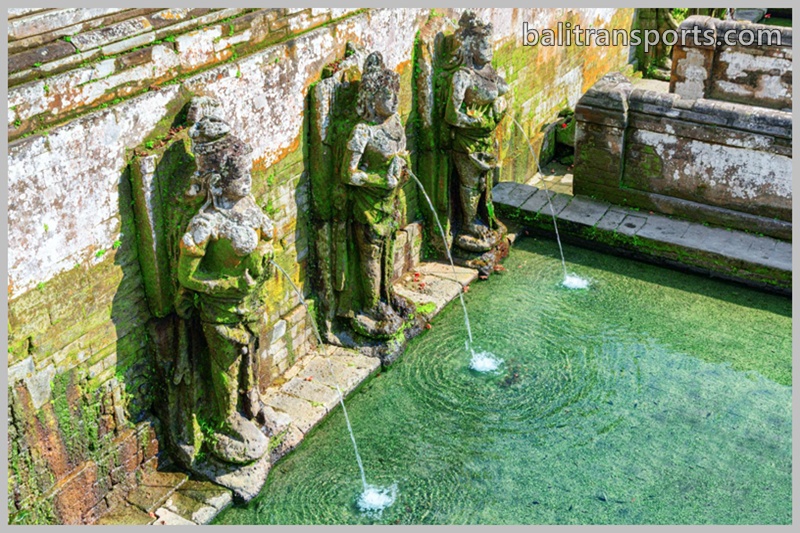
In front of the main cave, visitors can discover an ancient bathing complex featuring stone fountains and beautifully carved statues.
The bathing pools were discovered in 1954 by Dutch archaeologist Dr. Krijgsman. Archaeological restoration revealed six water-spouting statues positioned above the bathing area.
The fountains feature carved female figures holding water vessels, from which water traditionally flows into the bathing pools below. These structures are believed to have been used for ritual purification before religious ceremonies or meditation.
The bathing complex is one of the most attractive areas of Goa Gajah Temple because it showcases the remarkable stone craftsmanship and architectural skills of ancient Balinese civilization.
Buddhist Stupas and Ancient Meditation Sites
Goa Gajah also preserves several archaeological remains associated with Buddhism. Among the most interesting discoveries are ancient stupas and carved stone structures located around the temple complex.
Across the Petanu River, historical remains include carved niches and stupa representations. Some of these structures feature decorative umbrella-like elements, which are traditional symbols associated with Buddhist religious architecture.
These discoveries support the interpretation that Goa Gajah was once an important Buddhist meditation retreat. Buddhist monks are believed to have used natural caves and secluded hermitages as places for prayer, study, and contemplation.
The presence of Buddhist and Hindu remains within the same archaeological area makes Goa Gajah particularly important in understanding the historical interaction between the two religions in Bali.
Historical Background and Archaeological Evidence
Several historical sources and archaeological discoveries help explain the origins and development of Goa Gajah Temple.
1. Historical Inscriptions
An inscription associated with the Tengkulak area near Bedulu mentions a hermitage known as Lwa Gajah around 1011 AD. This provides an important historical reference connecting the ancient religious site with its present location.
2. Historical Architecture
The style of the carved inscriptions and bathing statues has similarities with archaeological remains from the East Javanese kingdoms during the 11th century. These artistic similarities help historians understand the cultural connections between Bali and Java during that period.
3. The Airlangga Period
King Airlangga ruled in East Java from 1019 to 1042 AD. The artistic characteristics of the Goa Gajah bathing statues have been compared with stone sculptures found at the Belahan temple complex in East Java, which is associated with his reign.
4. Ancient Balinese Kingdoms
Bali was ruled by King Udayana Warmadewa and his successors during the late 10th and early 11th centuries. This period was important for the development of religious traditions, artistic expression, and temple architecture throughout the island.
5. Historical Literature
The 14th-century Javanese literary work Nagarakretagama, written by Mpu Prapanca in 1365 AD, also contains references associated with the historical name Air Gajah. Such historical literature provides additional context for understanding the importance of ancient hermitages and religious centers in Bali.
The Meaning Behind the Name Goa Gajah
The name Goa Gajah literally translates into English as Elephant Cave. The word Goa means cave, while Gajah means elephant.
Although the name suggests a connection with elephants, the origin of the name is not entirely certain. One historical explanation connects it with the ancient name Lwa Gajah, which appears in inscriptions associated with the area.
The name is also commonly associated with the elephant-like appearance of the cave entrance and the presence of the Ganesha statue inside the cave.
Today, the name Goa Gajah is widely recognized by travelers as one of Bali’s most important historical and archaeological attractions.
Religious Significance of Goa Gajah Temple
Goa Gajah is particularly significant because it reflects the historical coexistence of Hindu and Buddhist religious traditions in Bali.
The archaeological remains indicate that the cave and surrounding hermitage were associated with Buddhist spiritual practices before Hindu Shaivite elements became part of the complex. Over time, these religious influences developed within the distinctive cultural and spiritual traditions of Bali.
Unlike some historical religious sites that represent only one tradition, Goa Gajah provides evidence of the interaction between Hinduism and Buddhism during the development of ancient Balinese civilization.
For Balinese Hindu communities, the temple remains a sacred place of worship and spiritual importance. Visitors are encouraged to respect its religious character, dress appropriately, and follow local temple regulations.
What to See at Goa Gajah Temple
During your visit to Goa Gajah, there are several interesting attractions worth exploring:
- The Main Elephant Cave: Discover the mysterious rock-carved entrance and explore the ancient meditation chamber.
- Ancient Stone Carvings: Admire the detailed reliefs depicting mythological figures and protective guardians.
- Ganesha Statue: See the Hindu deity associated with wisdom and the removal of obstacles.
- Sacred Lingga: Discover the religious symbols associated with Lord Shiva.
- Ancient Bathing Pools: Explore the historic purification pools and six carved water fountains.
- Buddhist Stupas: Learn about the Buddhist archaeological remains found throughout the complex.
- Petanu River Valley: Enjoy the natural surroundings and peaceful atmosphere of the temple grounds.
- Historical Temple Grounds: Walk through the gardens and discover the archaeological features that make Goa Gajah an important cultural destination.
Best Time to Visit Goa Gajah Temple
The best time to visit Goa Gajah Temple is generally in the morning, when the weather is cooler and the atmosphere is more peaceful. Arriving between 8:00 AM and 10:00 AM is a good option for exploring the cave, bathing pools, and surrounding archaeological areas.
The temple can be visited throughout the year. However, during Bali’s rainy season, visitors should take extra care when walking along stone steps and pathways, as some areas may become slippery.
Allow approximately 1 to 1.5 hours to explore the main cave, bathing pools, historical remains, and surrounding temple grounds.
How to Get to Goa Gajah Temple
Goa Gajah Temple is located in Bedulu Village, approximately 5 kilometers southeast of central Ubud and around 26 kilometers from Denpasar.
The temple is accessible by private car, motorcycle, taxi, or a private Bali tour with an experienced driver.
For visitors staying in Ubud, Goa Gajah is an easy cultural excursion and can be combined with nearby attractions such as Yeh Pulu, Pura Samuan Tiga, and other historical sites around Bedulu.
Travelers staying in Kuta, Seminyak, Canggu, Sanur, or Nusa Dua can also visit Goa Gajah as part of a full-day Ubud sightseeing tour.
Why Visit Goa Gajah Temple in Bali?
Goa Gajah is one of the best places in Bali to discover the island’s ancient history, religious heritage, and traditional stone craftsmanship. Its mysterious cave entrance, historic bathing pools, Hindu statues, Buddhist remains, and beautiful natural surroundings create a memorable cultural experience.
Whether you are interested in archaeology, Balinese Hindu traditions, Buddhist history, photography, or cultural sightseeing, Goa Gajah offers an opportunity to explore a different side of Bali beyond its beaches and modern tourist destinations.
For travelers planning an Ubud sightseeing itinerary, Elephant Cave Temple (Goa Gajah Temple) is a worthwhile historical attraction to include in your Bali holiday.
Goa Gajah Temple Entrance Fee (Elephant Cave), Bali
The entrance ticket for Goa Gajah Temple (Elephant Cave) in Bedulu Village, near Ubud, Bali, varies depending on whether visitors are international tourists or Indonesian domestic travelers. The admission fee includes access to the ancient cave, historic bathing pools, stone carvings, and surrounding archaeological temple complex.
Goa Gajah Temple Ticket Prices
- Foreign Adult: IDR 50,000 per person
- Foreign Child (5–11 years): IDR 25,000 per person
- Domestic Adult: IDR 30,000 per person
- Domestic Child (5–11 years): IDR 15,000 per person
- Children Under 5 Years: Free admission
Additional Information for Visitors
- Sarong and Sash: Sarong and sash rental are included in the entrance ticket. Visitors are required to dress modestly when entering the sacred temple area.
- Parking Fee: Parking costs approximately IDR 5,000 for cars and IDR 2,000 for motorcycles. Fees may vary depending on the parking area.
- Payment Methods: Entrance tickets can generally be paid for using cash or local QRIS payments. Bringing some Indonesian Rupiah in cash is recommended.
- Opening Hours: Goa Gajah Temple is generally open daily from 8:00 AM to 5:00 PM.
Visiting Goa Gajah Temple
Goa Gajah is a popular historical attraction near Ubud, making it an excellent destination for travelers interested in Bali’s ancient heritage and religious culture. Visitors can explore the mysterious Elephant Cave, admire the ancient stone carvings, discover the sacred bathing pools, and learn about the historical connections between Hinduism and Buddhism in Bali.
Travel Tip: It is recommended to visit Goa Gajah Temple in the morning when the weather is cooler and the surroundings are generally more comfortable for sightseeing. Please check the latest entrance fees and operating hours before your visit, as local admission prices and regulations may change.