


Taman Ayun Temple Mengwi, Bali – History, Architecture, Cultural Significance and Visitor Guide
Taman Ayun Temple (Pura Taman Ayun) is one of the most beautiful and historically significant Hindu temples in Bali. Located in Mengwi Village, Badung Regency, this magnificent temple is renowned for its traditional Balinese architecture, beautifully landscaped gardens, elegant water features, and impressive multi-tiered shrines known as Meru. Surrounded by a wide moat filled with water, the temple appears to float on the surface of a lake, creating a peaceful and picturesque atmosphere.
The name Taman Ayun can be translated as “Beautiful Garden” or “Garden in the Water.” The temple is particularly famous for its carefully designed courtyards, traditional stone gates, ornamental ponds, and towering pagoda-like shrines. These architectural elements reflect the artistic achievements, religious traditions, and royal heritage of Bali.
Taman Ayun Temple is situated approximately 18 km northwest of Denpasar City and is easily accessible from popular tourist destinations such as Ubud, Canggu, Seminyak, and Kuta. Its beautiful surroundings and historical importance make it a popular destination for travelers interested in Balinese culture, Hindu traditions, history, and architecture.
The temple is also widely known as the Royal Temple of the Mengwi Kingdom, as it was established as an important place of worship for the royal family and the people of the former Mengwi Kingdom. Today, Taman Ayun remains an active religious site and an important cultural landmark in Bali.
History of Taman Ayun Temple
The history of Taman Ayun Temple dates back to 1634 AD, during the reign of I Gusti Agung Putu, the founder and first ruler of the Mengwi Kingdom. According to the historical manuscript known as Lontar Babad Mengwi, the temple was consecrated in 1634 and was originally called Pura Taman Ahyun.
The word “Ahyun” is derived from the Balinese root word Hyun, which is associated with wishes, desires, or aspirations. The original name refers to a sacred temple established within a beautiful garden and water landscape, symbolizing a peaceful place that fulfills spiritual aspirations. Over time, the name Ahyun evolved into Ayun, giving the temple its present name, Taman Ayun.
The temple was constructed as a royal sanctuary where members of the Mengwi royal family and local communities could worship Hindu deities and honor their ancestors. It also served as an important religious center for the kingdom, bringing together various aspects of Balinese Hindu worship and traditional royal ceremonies.
In addition to its religious function, the temple represented the prosperity, authority, and cultural identity of the Mengwi Kingdom. Its spacious gardens, magnificent shrines, and surrounding water features demonstrate the importance of harmony between architecture, nature, and spirituality in traditional Balinese society.
Taman Ayun Temple underwent major restoration and renovation work in 1947, helping preserve its historic buildings and architectural beauty for future generations.
In 2012, Taman Ayun Temple was included in the UNESCO World Heritage listing as part of the Cultural Landscape of Bali Province, which recognizes the traditional Subak irrigation system and the relationship between Balinese Hindu philosophy, water management, and agricultural landscapes.
Unique Architecture of Taman Ayun Temple
One of the main attractions of Taman Ayun Temple is its distinctive traditional Balinese architecture. The temple complex features beautifully decorated entrance gates, spacious courtyards, ornamental gardens, and impressive shrines surrounded by a large water moat.
The overall design reflects the traditional Balinese concept of dividing sacred spaces into different levels, with each courtyard having its own religious and symbolic significance.
The temple complex is generally divided into three main courtyards:
1. Outer Courtyard (Jaba)
The outer courtyard is the first area visitors encounter after crossing the entrance bridge. This spacious garden area features green lawns, tropical trees, flowering plants, and decorative landscaping.
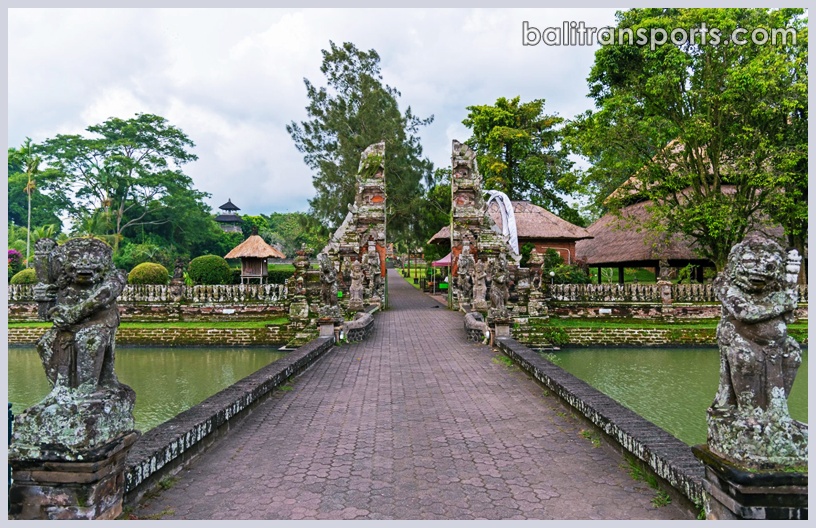
A large water moat surrounds the temple complex, creating the impression that the sacred grounds are floating on the water. The bridge leading to the main entrance provides a beautiful view of the temple and is one of the most photographed areas of Taman Ayun.
The peaceful atmosphere, well-maintained gardens, and traditional Balinese design make this courtyard an excellent place to appreciate the beauty of the temple.
2. Middle Courtyard (Jaba Tengah)
The middle courtyard serves as a transition area between the outer garden and the most sacred inner section of the temple.
Visitors can admire traditional Balinese pavilions, carved wooden structures, stone ornaments, and ceremonial buildings. One of the notable features is the traditional entrance gate, which leads toward the inner temple grounds.
This section reflects the artistic craftsmanship of Balinese temple architecture, with intricate carvings and decorative details representing traditional religious beliefs and cultural heritage.
3. Inner Courtyard (Jeroan)
The inner courtyard is the most sacred section of Taman Ayun Temple. It contains numerous shrines dedicated to Hindu deities and ancestral spirits.
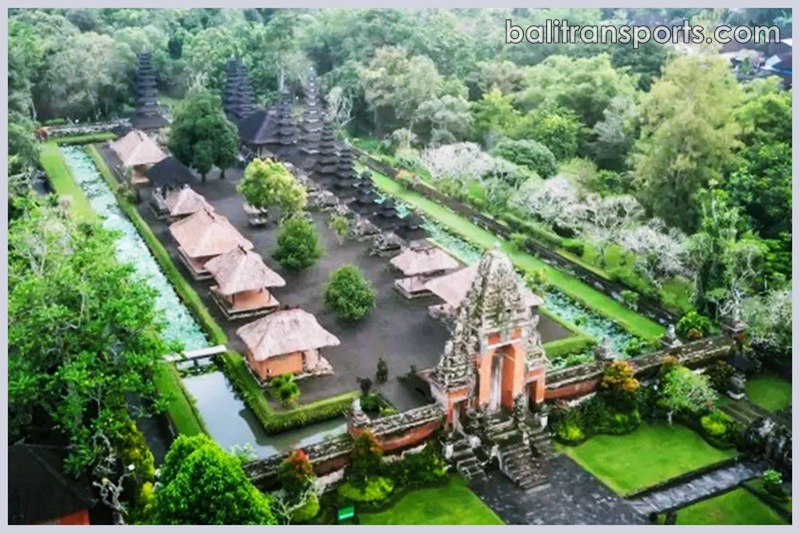
The most distinctive structures are the Meru, multi-tiered shrines with roofs arranged in several levels. These impressive buildings are among the most recognizable features of Balinese Hindu temples.
The number of roof tiers varies according to the religious significance of each shrine. Some Meru structures feature three, five, seven, nine, or eleven tiers, with each design representing different spiritual meanings and levels of divine importance.
The inner courtyard is particularly beautiful because of the contrast between the dark traditional roofs, carved wooden decorations, stone structures, and surrounding greenery.
As this is a sacred worship area, access to certain sections may be restricted to visitors who are not participating in religious ceremonies.
Religious and Cultural Significance of Taman Ayun Temple
Taman Ayun Temple is more than a historical monument or tourist attraction. It continues to play an important role in the religious life of the Balinese Hindu community.
According to the historical traditions recorded in Babad Mengwi and the temple’s religious structure, Taman Ayun serves as a place of worship for Hindu deities in their various manifestations.
One of the principal deities associated with the temple is Lord Vishnu, who represents the preserver and protector within the Hindu Trimurti. Traditional Balinese religious references also associate the temple with the worship of divine manifestations connected to Mount Mangu.
The temple complex also contains shrines associated with ancestral worship, particularly the veneration of Pitara or Dewa Hyang. These terms refer to the sacred spirits of ancestors who have passed away and are honored through traditional Hindu ceremonies.
The presence of ancestral shrines, including the Paibon structures, reflects the temple’s special connection with the royal family of Mengwi. These shrines served as important places for the descendants of the royal family to honor their ancestors and maintain their spiritual relationship with previous generations.
For the people of Mengwi, Taman Ayun represents an important connection between religion, royal history, ancestral traditions, and community identity.
Taman Ayun Temple Ceremony and Odalan
Like other important Hindu temples in Bali, Taman Ayun Temple regularly holds religious ceremonies known as Odalan. An Odalan is a temple anniversary celebration conducted according to the traditional Balinese Pawukon calendar.
The temple’s anniversary ceremony takes place every 210 days, corresponding to the Balinese calendar cycle. The celebration is traditionally held on a day known as Anggara Kasih, and the ceremonies may continue for several days.
During the Odalan celebration, Balinese Hindu devotees gather at the temple to offer prayers, present offerings, and participate in various religious activities.
The temple becomes especially vibrant during these celebrations, with traditional decorations, colorful offerings, ceremonial umbrellas, and beautifully dressed worshippers adding to the spiritual atmosphere.
Traditional Balinese gamelan music and religious processions may also accompany important temple ceremonies.
For visitors who have the opportunity to witness an Odalan, it can be a memorable way to experience authentic Balinese Hindu culture. However, visitors should always respect religious activities, follow temple regulations, and avoid disturbing worshippers.
Taman Ayun Temple and the Balinese Philosophy of Tri Hita Karana
Taman Ayun Temple is closely connected with the Balinese Hindu philosophy of Tri Hita Karana, which emphasizes harmony between three important relationships:
- Parahyangan: Harmony between human beings and God through prayer, worship, and religious devotion.
- Pawongan: Harmony among people through social relationships, cooperation, and community activities.
- Palemahan: Harmony between human beings and the natural environment.
The temple’s beautiful gardens, surrounding water moat, sacred shrines, and carefully planned courtyards reflect these principles.
The water features are particularly meaningful because water plays an essential role in Balinese Hindu traditions, agriculture, purification, and daily life.
This philosophy is also closely connected with Bali’s traditional Subak irrigation system, which forms an important part of the island’s cultural landscape recognized by UNESCO.
Things to See and Do at Taman Ayun Temple
Taman Ayun Temple offers more than religious and historical interest. Its beautiful surroundings make it an enjoyable destination for sightseeing, photography, and cultural exploration.
Some of the highlights include:
- Explore the Traditional Balinese Temple Architecture: Admire the beautifully carved entrance gates, stone ornaments, wooden pavilions, and traditional multi-tiered Meru shrines.
- Walk Around the Beautiful Gardens: Enjoy the spacious green lawns, tropical plants, and peaceful atmosphere surrounding the temple.
- See the Water Moat: Observe the large moat surrounding the temple complex, one of its most distinctive architectural features.
- Discover the Royal History of Mengwi: Learn about the former Mengwi Kingdom and the temple’s important relationship with the royal family.
- Take Beautiful Photographs: Capture the traditional temple structures, ornamental gardens, water features, and impressive shrines.
- Experience Balinese Hindu Culture: Learn about local religious traditions, temple ceremonies, ancestral worship, and the philosophy of Tri Hita Karana.
- Enjoy a Relaxing Cultural Visit: Unlike some of Bali’s busier tourist attractions, Taman Ayun provides a pleasant environment for a leisurely walk and cultural discovery.
Best Time to Visit Taman Ayun Temple
The best time to visit Taman Ayun Temple is generally in the morning, between 8:00 AM and 10:00 AM, when the weather is usually cooler and the temple grounds are often quieter.
Late afternoon is another pleasant time to explore the complex, especially for visitors who enjoy photography and the softer natural lighting.
Bali has a tropical climate, with a dry season generally occurring from April to October and a rainy season from November to March. Visiting during the dry season can make walking around the temple gardens more comfortable.
However, Taman Ayun Temple can be visited throughout the year. During the rainy season, the surrounding gardens and tropical vegetation can look particularly green and refreshing.
How to Get to Taman Ayun Temple Mengwi
Taman Ayun Temple is located in Mengwi Village, Badung Regency, approximately 18 km northwest of Denpasar.
The temple is relatively easy to reach from several popular tourist areas in southern and central Bali.
Approximate travel distances include:
- Denpasar: 18 km.
- Ubud: 22 km.
- Canggu: 15 km.
- Seminyak: 22 km.
- Kuta: 25 km.
- Ngurah Rai International Airport: 30 km.
Travel times depend on traffic conditions, departure locations, and road conditions.
The most convenient way to visit Taman Ayun Temple is by private car or Bali car rental with an experienced local driver. This option allows visitors to explore the temple comfortably and combine the visit with other attractions around Mengwi, Tabanan, and central Bali.
Nearby Tourist Attractions to Visit with Taman Ayun Temple
Taman Ayun Temple is an excellent stop for travelers exploring Bali’s cultural and natural attractions. Its location in Mengwi makes it convenient to combine the visit with several interesting destinations.
Some nearby attractions include:
- Alas Kedaton Monkey Forest: A traditional forest sanctuary known for its population of long-tailed macaques and ancient Hindu temple.
- Tanah Lot Temple: One of Bali’s most famous sea temples, spectacularly positioned on a rocky offshore formation overlooking the Indian Ocean.
- Sangeh Monkey Forest: A beautiful nutmeg forest featuring ancient trees, wild monkeys, and traditional temple structures.
- Jatiluwih Rice Terraces: A UNESCO-recognized cultural landscape famous for its expansive green rice terraces and traditional Subak irrigation system.
- Bedugul and Ulun Danu Beratan Temple: A scenic mountain destination featuring a beautiful lakeside Hindu temple surrounded by cool highland scenery.
- Batu Bolong Temple: A picturesque sea temple near Tanah Lot, situated on a natural rock formation overlooking the ocean.
These attractions can be included in a full-day Bali sightseeing itinerary, depending on your starting location and available travel time.
Why Visit Taman Ayun Temple in Bali?
Taman Ayun Temple is one of the most worthwhile cultural attractions to include in a Bali sightseeing itinerary. Its beautiful gardens, impressive multi-tiered shrines, traditional Balinese architecture, and royal history provide visitors with a deeper understanding of the island’s religious and cultural heritage.
Unlike temples located on dramatic cliffs or mountain slopes, Taman Ayun is surrounded by an elegant water moat and spacious landscaped gardens, creating a peaceful and distinctive atmosphere.
Whether you are interested in Balinese Hindu traditions, historical architecture, photography, or simply exploring beautiful cultural landmarks, Taman Ayun Temple offers an enjoyable and educational experience.
For travelers planning a Bali cultural tour, visiting Taman Ayun Temple in Mengwi is an excellent opportunity to discover the historical legacy of the Mengwi Kingdom and appreciate the spiritual traditions that continue to shape Balinese life today.
Taman Ayun Temple Entrance Fee and Visitor Information
The entrance fee for Taman Ayun Temple in Mengwi, Bali, varies depending on whether visitors are international tourists or Indonesian domestic travelers.
Taman Ayun Temple Ticket Prices
- Foreign Adult Visitors: IDR 50,000 per person
- Foreign Children: IDR 25,000 per person
- Indonesian Adult Visitors: IDR 25,000 per person
- Indonesian Children: IDR 15,000 per person
Additional Visitor Information
- Sarong and Sash: The entrance ticket includes the use of a traditional Balinese sarong and sash, which visitors are required to wear when entering the temple grounds.
- Opening Hours: Taman Ayun Temple is generally open daily from 8:00 AM to 6:00 PM, allowing visitors plenty of time to explore its beautiful gardens, traditional architecture, and historic temple buildings.
- Parking Fees: Parking costs approximately IDR 5,000 for cars and IDR 2,000 for motorcycles or scooters.
- Payment Method: Bringing cash is recommended when purchasing entrance tickets and paying for parking. Although electronic payment facilities, including card and QRIS payments, may be available, their reliability can vary.
Travel Tip: For a more comfortable visit, arrive in the morning when the weather is cooler and the temple grounds are generally quieter. Remember to dress respectfully and follow the temple’s visitor regulations when exploring this important Balinese Hindu heritage site.
Note: Entrance fees, parking charges, opening hours, and payment facilities may change. Visitors are advised to confirm the latest information at the temple ticket counter before visiting.