


Tanah Lot Temple Bali – History, Legend, Architecture, and Visitor Guide
Tanah Lot Temple (Pura Tanah Lot) is one of the most famous Hindu temples in Bali and a must-visit destination for anyone exploring the island. Located on the southwestern coast of Bali, in Beraban Village, Kediri District, Tabanan Regency, this iconic sea temple stands on a large offshore rock formation surrounded by the Indian Ocean. Its dramatic setting, ancient religious traditions, and spectacular coastal scenery make Tanah Lot one of Bali’s most photographed cultural landmarks.
The name Tanah Lot is commonly understood as meaning “Land in the Sea,” reflecting the temple’s unusual position on a rocky island separated from the mainland by seawater during high tide. During low tide, visitors can walk across the exposed rocky shoreline and approach the base of the temple, creating a memorable experience and an excellent opportunity to appreciate its unique location.
Tanah Lot is not only an important place of worship for Balinese Hindus but also a significant cultural and historical attraction. The temple is particularly popular in the late afternoon when visitors gather to enjoy the beautiful sunset behind the temple, creating one of the most recognizable landscapes in Bali.
History of Tanah Lot Temple
The history of Tanah Lot Temple is closely connected with the development of Hinduism and Balinese spiritual traditions. According to local historical accounts and religious legends, the temple dates back several centuries and is associated with the arrival of the Hindu priest Dang Hyang Nirartha from Java during the 16th century.
Dang Hyang Nirartha was an important Hindu religious figure who travelled throughout Bali to spread Hindu teachings, strengthen religious traditions, and establish or develop several important temples. His influence played a significant role in shaping Balinese Hindu culture, which continues to be practised today.
Tanah Lot is also believed to be one of seven important sea temples established along the Balinese coastline. These temples were positioned so that each could be seen from the next, forming a spiritual chain of protection around the island. Together, the sea temples were intended to honour the ocean deities and protect Bali from negative spiritual influences.
The temple’s location on a rocky offshore formation makes it particularly distinctive. Unlike many other Balinese temples built on hillsides, in forests, or within villages, Pura Tanah Lot appears to rise directly from the sea, creating a powerful connection between nature, religion, and local mythology.
The Legend of Dang Hyang Nirartha and Tanah Lot Temple
One of the most famous stories surrounding Tanah Lot Temple concerns Dang Hyang Nirartha, a respected Hindu priest who arrived in Bali from Java during the 16th century.
According to local legend, Nirartha visited the coastal area of Beraban and recognized a strong spiritual presence on a large offshore rock. He considered the location a sacred place suitable for worshipping the ocean deity.
At that time, the local religious leader, Bendesa Beraben, reportedly became jealous when many of his followers began listening to Nirartha’s teachings. Feeling threatened by the priest’s growing influence, Bendesa Beraben ordered him to leave the area.
However, according to the legend, Nirartha used his spiritual powers to move the large rock on which he was resting away from the mainland and into the sea. He then transformed his sash into sacred sea snakes to guard the temple and protect it from evil forces.
These mythical snakes are believed to continue guarding Tanah Lot Temple today. Local traditions associate them with spiritual protection and the safety of the sacred site.
The story further explains that Bendesa Beraben eventually accepted Nirartha’s teachings and became a follower of his religious philosophy.
Although this account belongs to Balinese religious folklore rather than documented historical evidence, it remains an important part of Tanah Lot’s cultural identity and helps explain why the temple is considered such a sacred destination.
Religious Significance of Tanah Lot Temple
Tanah Lot Temple holds an important position in Balinese Hindu religious life. It is traditionally associated with the worship of Dewa Baruna, also known as the sea god, who is believed to rule over the ocean and its natural forces.
The temple serves as a spiritual place where Balinese Hindus offer prayers and ceremonies to express gratitude, seek protection, and maintain harmony between human beings, nature, and the spiritual world.
According to traditional accounts, the location was already considered sacred before the construction of the present temple. Some interpretations connect the site with ancient forms of worship associated with Lord Shiva and the presence of a sacred stone or menhir.
The arrival of Dang Hyang Nirartha in the 16th century is traditionally regarded as an important moment in the development of the temple. Rather than completely replacing earlier traditions, the religious practices associated with the site became incorporated into the broader framework of Balinese Hinduism.
Tanah Lot is also connected with the concept of Tri Hita Karana, a Balinese Hindu philosophy emphasizing harmony between humans and God, humans and other people, and humans and the natural environment.
Because of its religious importance, the inner temple areas are generally reserved for worshippers, particularly during ceremonies. Visitors should respect local customs, follow temple regulations, and dress appropriately when entering permitted areas.
Architecture and Unique Structure of Tanah Lot Temple
The architecture of Tanah Lot Temple is closely adapted to its natural surroundings. The main temple complex occupies an irregular rocky plateau surrounded by seawater, making its structure quite different from temples located on ordinary land.
The temple’s traditional Balinese architectural elements include sacred shrines, courtyards, stone structures, and multi-tiered roofs known as Meru.
One of the most recognizable features is the multi-level Meru shrine, which is traditionally associated with worship and the honouring of Hindu deities. Its distinctive tiered roof represents the sacred mountain in Hindu-Balinese cosmology.
The temple complex is also associated with the worship of Dewa Baruna, the guardian of the ocean. Its position facing the sea reflects the close relationship between Balinese Hindu religious beliefs and the natural environment.
The surrounding rock formations, crashing waves, and changing ocean levels create a dramatic atmosphere that makes Tanah Lot one of the most distinctive examples of a coastal temple in Bali.
Visitors should remember that Tanah Lot is an active religious site, not simply a tourist attraction. Certain areas may be restricted during ceremonies or for religious purposes.
Batu Bolong Temple – Another Beautiful Temple Near Tanah Lot
Another attraction worth visiting during your trip to Tanah Lot is Batu Bolong Temple (Pura Batu Bolong).
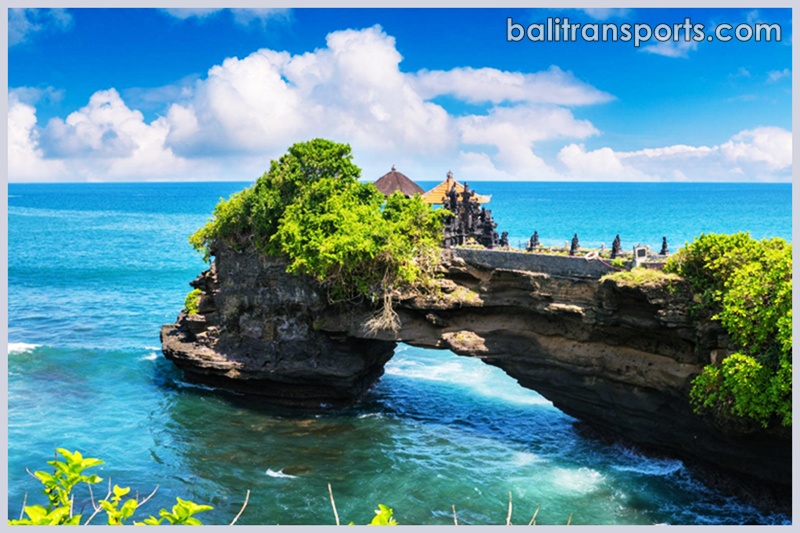
Located within the same coastal temple area, Batu Bolong is famous for its distinctive rock formation featuring a natural hole or arch through which the seawater flows. The temple stands on a rocky outcrop extending into the ocean and provides beautiful views of the surrounding coastline.
The name Batu Bolong comes from the Indonesian words batu, meaning stone, and bolong, meaning hole. This name describes the natural opening in the rock formation beneath the temple.
Batu Bolong Temple offers a different perspective from the main Tanah Lot Temple. While Tanah Lot is famous for its offshore rock formation, Batu Bolong is particularly admired for its natural stone bridge and dramatic coastal scenery.
A well-maintained walking pathway connects the main Tanah Lot visitor area with Batu Bolong, allowing visitors to explore both temples during the same visit.
Best Time to Visit Tanah Lot Temple Bali
The best time to visit Tanah Lot Temple depends on the experience you want to enjoy.
Late Afternoon and Sunset
Late afternoon is the most popular time to visit Tanah Lot. The sunlight becomes softer, the sky often changes into beautiful shades of orange and gold, and the temple creates a spectacular silhouette against the ocean.
Many visitors arrive between 4:00 PM and 5:00 PM to explore the temple grounds, visit Batu Bolong, take photographs, and find a suitable viewpoint before sunset.
Morning Visits
Morning visits are ideal for travellers who prefer a quieter atmosphere. The area is generally less crowded, temperatures are more comfortable, and the coastal scenery can be enjoyed without the large afternoon crowds.
During Low Tide
Low tide provides a different experience because visitors can walk across the exposed rocky shoreline towards the base of Tanah Lot Temple. Depending on sea conditions and temple regulations, visitors may be able to see the sacred freshwater spring and the area associated with the legendary guardian snakes.
Always follow local staff instructions and avoid approaching the rocks when waves are strong.
Facilities and Tourist Attractions Around Tanah Lot
Tanah Lot Temple is a well-developed tourist destination with various facilities designed to make visiting comfortable for both domestic and international travellers.
The main entrance area has convenient pedestrian pathways leading towards the temple viewpoints, Batu Bolong, and surrounding coastal attractions. Tropical gardens, resting areas, and shaded spots provide places to relax while enjoying the scenery.
Facilities and services around the Tanah Lot tourism area include:
-
Parking Area: Spacious parking facilities for motorcycles, private cars, minibuses, and tourist buses.
-
Public Toilets: Toilet facilities are available within the visitor area.
-
Resting Areas: Shaded seating areas and traditional Balinese resting pavilions provide places to relax.
-
Restaurants and Cafes: Visitors can enjoy Indonesian dishes, Balinese food, snacks, and refreshments.
-
Souvenir Shops: Numerous shops sell traditional handicrafts, clothing, sarongs, accessories, paintings, and Bali-themed souvenirs.
-
Photography Viewpoints: Several scenic locations provide excellent views of Tanah Lot Temple, Batu Bolong, and the surrounding coastline.
-
Tourist Information and Security: Visitor management facilities help maintain a comfortable and organized tourism environment.
The walking route from the parking area towards the temple is lined with art shops and local vendors. You can find a variety of souvenirs, including traditional Balinese handicrafts, handmade accessories, clothing, and decorative items.
Visitors can also try traditional Balinese snacks such as jaja klepon. These small, soft rice-flour balls are filled with melted palm sugar and coated with freshly grated coconut. They are a popular local treat and worth trying while exploring the area.
How to Get to Tanah Lot Temple Bali
Tanah Lot Temple is located in Beraban Village, approximately 20–25 kilometres from central Seminyak and around 13–15 kilometres from central Canggu, depending on the starting point and route.
Travelling by private car with a driver is one of the most convenient ways to visit Tanah Lot, especially if you plan to combine the temple with other attractions around Tabanan and southern Bali.
Approximate travel times include:
| Starting Location | Estimated Travel Time |
|---|---|
| Canggu | 30–45 minutes |
| Seminyak | 45–60 minutes |
| Kuta | 60–75 minutes |
| Denpasar | 45–60 minutes |
| Ubud | 60–90 minutes |
| Nusa Dua | 75–100 minutes |
| Ngurah Rai Airport | 60–90 minutes |
Travel times depend on traffic conditions, weather, and the time of day. Late afternoon traffic can be particularly busy around popular tourist areas.
Recommended Places to Visit Near Tanah Lot Temple
If you have enough time, you can combine your Tanah Lot visit with several other attractions in Bali. The surrounding Tabanan area offers beautiful rice terraces, traditional villages, temples, and scenic countryside.
Some recommended places include:
-
Taman Ayun Temple – A beautiful royal family temple surrounded by landscaped gardens, traditional architecture, and a wide moat.
-
Alas Kedaton Monkey Forest – A peaceful forest sanctuary featuring hundreds of monkeys and a traditional Hindu temple.
-
Jatiluwih Rice Terraces – Famous for its spectacular green rice fields and traditional Subak irrigation system, recognized as part of a UNESCO cultural landscape.
-
Bali Butterfly Park – A nature attraction where visitors can discover various butterfly species and other tropical insects.
-
Kedungu Beach – A scenic black-sand beach offering a quieter coastal atmosphere and beautiful sunset views.
These destinations can be arranged into a full-day Bali sightseeing itinerary, depending on your accommodation location and travel preferences.
Travel Tips for Visiting Tanah Lot Temple
To make your visit more enjoyable, consider the following practical tips:
-
Arrive around 4:00 PM if you want to enjoy the temple grounds before sunset.
-
Check the tide schedule if you want to see the temple from the exposed rocky shoreline.
-
Bring a camera or smartphone to capture the beautiful coastal scenery.
-
Wear comfortable walking shoes because the pathways and rocky areas can be uneven.
-
Bring sunscreen, sunglasses, and drinking water, especially during sunny afternoons.
-
Respect Balinese Hindu customs and avoid entering restricted temple areas.
-
Dress modestly when visiting sacred areas and follow any instructions from temple staff.
-
Keep a safe distance from the ocean, particularly during high tide and rough weather.
-
Allow approximately 1.5–2 hours to explore Tanah Lot and Batu Bolong comfortably.
Explore Tanah Lot Temple with Bali Transports
Visiting Tanah Lot Temple is an excellent addition to your Bali holiday itinerary, whether you are travelling as a couple, with family, or as part of a large group.
For a more comfortable sightseeing experience, you can arrange a private car, minibus, Toyota Hiace, Isuzu Elf, or tourist bus with an experienced local driver through Balitransports.com
A private vehicle with a driver allows you to explore Tanah Lot at your own pace without worrying about public transportation, parking arrangements, or navigating unfamiliar roads. You can also combine your visit with Taman Ayun Temple, Alas Kedaton Monkey Forest, Jatiluwih Rice Terraces, and other popular attractions.
Whether you need transportation for a family holiday, a private sightseeing tour, a company outing, or a large group excursion, Bali Bus Rental can help arrange suitable transportation according to your group size and travel itinerary.
Discover the beauty of Tanah Lot Temple Bali, experience its fascinating Hindu legends, admire the spectacular coastal scenery, and enjoy one of the island’s most unforgettable sunset destinations.
Tanah Lot Temple Entrance Fee and Ticket Prices
The entrance fee for Tanah Lot Temple (Pura Tanah Lot) in Tabanan, Bali, varies depending on the visitor’s nationality and age. International tourists pay IDR 75,000 per adult and IDR 40,000 per child, while Indonesian and local visitors benefit from lower admission rates.
The entrance ticket provides access to the Tanah Lot tourism area, including the coastal walking paths, scenic viewpoints, and surrounding temple grounds. Visitors can enjoy spectacular ocean views, explore the nearby Batu Bolong Temple area, and admire the famous offshore temple from different viewing points.
Tanah Lot Temple Entrance Ticket Price
The following is the entrance fee breakdown for domestic and international visitors:
| Visitor Category | Entrance Fee |
|---|---|
| Foreign Adult | IDR 75,000 |
| Foreign Child (5–10 years) | IDR 40,000 |
| Indonesian / Local Adult | IDR 30,000 |
| Indonesian / Local Child (5–10 years) | IDR 20,000 |
| Children Under 5 Years | Free |
Additional Fees and Important Visitor Information
Apart from the standard admission ticket, visitors should prepare a small additional budget for parking and optional entertainment activities around the Tanah Lot tourism complex.
-
Motorcycle / Scooter Parking: IDR 3,000 per vehicle.
-
Car Parking: IDR 5,000 per vehicle.
-
Payment Method: Visitors should bring sufficient Indonesian Rupiah cash, preferably small banknotes, for ticket purchases and additional expenses at the entrance booths. Confirm available payment options before visiting.
-
Temple Access: The admission ticket provides access to the public tourism area, coastal pathways, viewing platforms, and the rocky shoreline during low tide. However, the inner sacred temple areas are reserved for Hindu worshippers and authorized religious activities.
-
Optional Kecak and Fire Dance: Visitors can also enjoy the traditional Kecak and Fire Dance performance near Pura Batu Bolong. This evening cultural show requires a separate ticket, which is approximately IDR 100,000 per person.
Travel Tip: If you want to experience the best scenery at Tanah Lot Temple, consider arriving in the late afternoon, around 4:00 PM. This gives you enough time to explore the temple surroundings, visit Batu Bolong, take photographs, and find a good viewpoint before sunset.
Note: Entrance fees, parking charges, and cultural performance prices may change. It is advisable to confirm the latest rates with Tanah Lot tourism management before your visit.